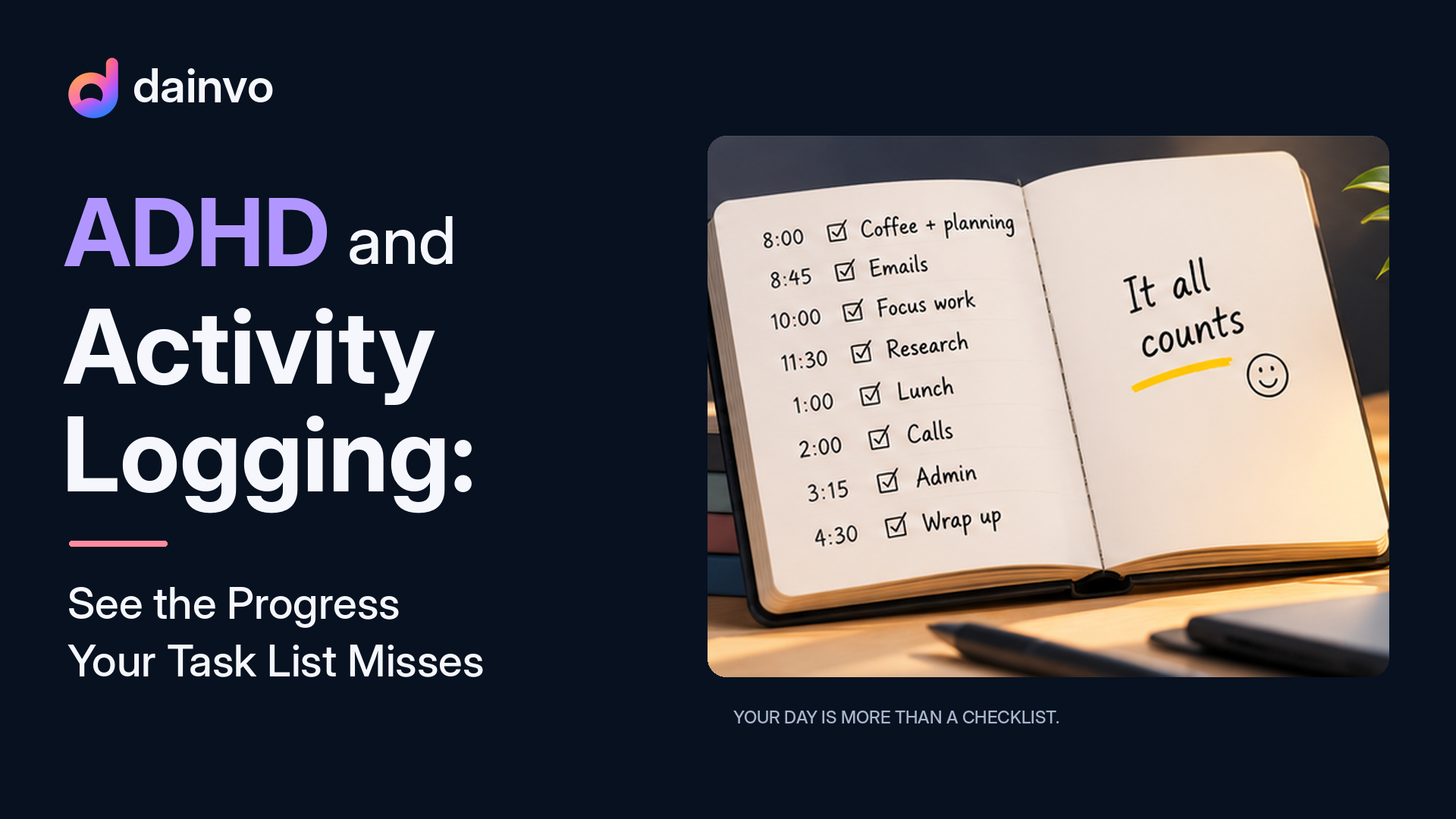
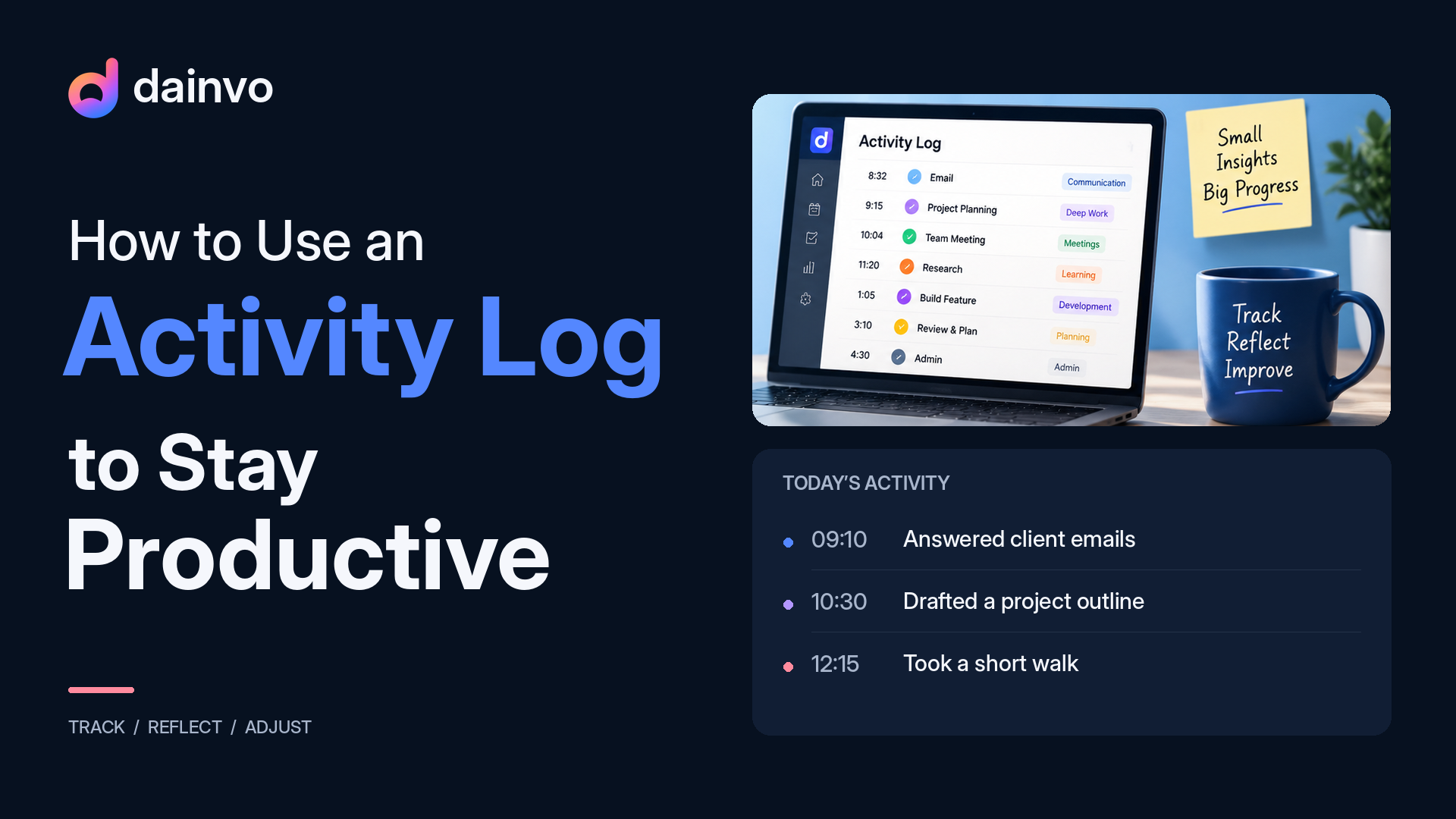
Your calendar shows the meetings. Your task list shows what needs doing. An activity log adds the part that is easy to lose: what you actually worked on, how far you got, and what changed along the way.
A short entry after a work session gives you something useful to come back to. You can pick up the thread of an unfinished task, see progress across a project, or spot the requests that keep reshaping your afternoon.
That makes logging a practical companion to planning. Capture the work while it is fresh, then bring what you learned into the next day.
Quick answer
A daily activity log helps you keep a record of your work alongside your planning routine. Write a short entry after an activity, then review your entries to see what moved forward and what needs attention next. A notebook, notes app, or simple document is enough to get started.
You do not need to track every minute. Start with major work sessions and moments when the plan changes. Note the outcome or obstacle, not just the task name.
The payoff is a clearer starting point: you know where you left off, which obstacles need action, and what to make room for tomorrow.
Find the details that make tomorrow easier
Logging is especially useful when it helps you answer a question that comes up in your work. A few entries can give you context that a calendar or task name alone would miss.
Use the record to explore questions such as:
- "Why does the proposal keep moving to tomorrow?"
- "What work arrives after I have already planned the day?"
- "Am I leaving enough time for the weekly report?"
- "Which meetings create follow-up work I have not accounted for?"
Each question changes what is worth recording. If the proposal is the concern, note what you did during the time you meant to work on it. If you are investigating report estimates, include approximate start and finish times and any interruptions.
For a student, the question might concern an assignment that never gets beyond research. For a freelancer, it might concern client revisions that keep displacing paid work. The log should help with a decision you already need to make.
Record outcomes and obstacles, not just activity names
"Email" is an activity. "Resolved the delivery question; still waiting for the signed agreement" tells you what happened and what remains open.
The extra detail does not need to be long. A useful entry usually answers what you worked on and, when relevant, where you left it.
For example:
- "Drafted the proposal scope. Pricing section still needs the supplier quote."
- "Client call changed the delivery date; revised the project plan."
- "Answered routine messages before starting the proposal."
- "Reviewed the draft but did not send it; need one final decision."
Each example keeps the outcome close to the activity. When you return to the work, you have a note about where you left it and what comes next.
If you want to compare how long recurring work takes, include approximate start and finish times in the entry text. If you mainly want to remember decisions and next steps, focus on those. You choose the detail that is useful to you.
Keep important work in view
An activity log gives you a way to compare the work you planned with the work that filled the day. That is useful when several worthwhile tasks are competing for your attention.
Consider an illustrative afternoon: you plan to finish a proposal, but first improve a slide deck, clear some messages, and help a colleague find a document. Each activity has a reasonable explanation. Together, they use the time you had available for the proposal.
The log helps you examine that trade-off. You might decide the colleague's request deserved priority. You might also decide the slide deck could have waited.
Context makes that review more useful. "Helped a colleague resolve a customer issue" explains a change of priority. "Polished the slides before opening the proposal" points to a choice you might make differently next time.
If responding to requests is part of your role, the record can also help you account for that work. Leave capacity for it in your next plan instead of treating every request as a surprise.
Build on the value of progress monitoring
A meta-analysis by Harkin and colleagues examined 138 randomized studies involving 19,951 participants. Interventions that encouraged people to monitor progress improved goal attainment on average. Effects were larger in studies where progress was physically recorded.
The research supports progress monitoring across a range of goals and populations. For your workday, it offers a useful principle: keep progress visible and review it against what you want to accomplish.
An activity log can help you put that principle into practice by connecting entries to a goal. If your goal is to send the proposal, notes about drafting the scope, getting the quote, and completing the review show the steps toward that outcome. Use them to choose the next action.
Keep a record alongside your plan
Choose a place you can open easily during work. Put the date at the top and add a short entry after a work session or meeting. Keeping entries together makes it easier to look back at a day or review a recurring task.
Your calendar and tasks describe what you intend to do; your activity log records what happened. You can capture a useful conversation or an unexpected piece of work without creating another task or filling a calendar slot.
When an entry points to a follow-up, add it to your task list. If it needs focused work, schedule a work block. Your log preserves the context, and your plan gives the next action a place to happen.
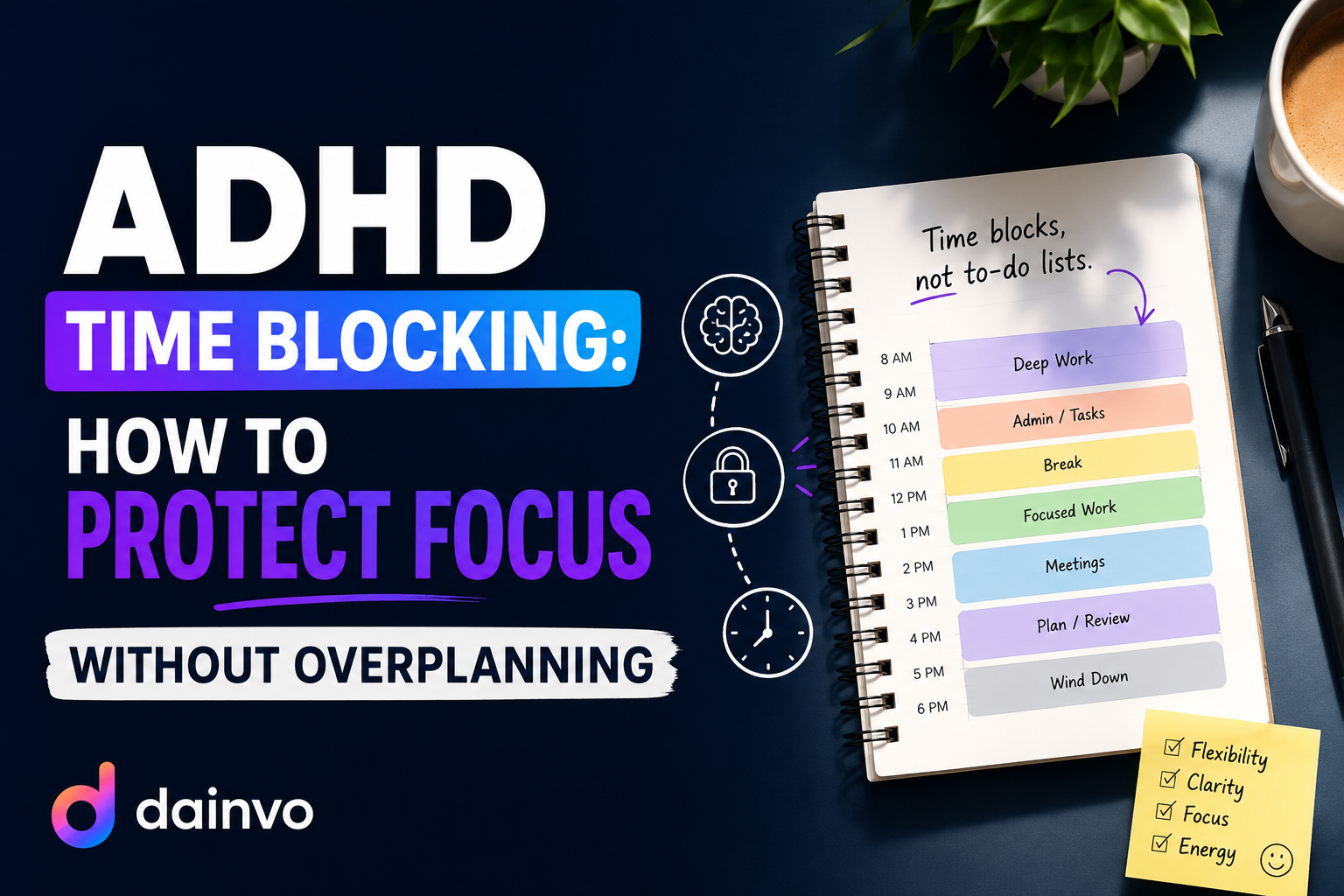
Time blocking gives that next action a place in the day. Logging gives you information to bring to the plan rather than starting with the same assumptions every morning.
A daily routine that leads to a decision
Start with a priority and keep the review short enough that you will do it on an ordinary workday.
Before work: define an observable result
"Work on the proposal" is hard to evaluate. "Send a draft for review" gives you a clearer outcome. For longer work, a result might be making a decision, resolving a question, or completing a section rather than finishing the whole project.
Choose a result that fits around the commitments you already have. Previous log entries can remind you of the preparation or follow-up to allow for.
During work: capture the useful stopping points
Add an entry when you finish a substantial work session, leave a meeting, or change direction. Note what happened and any unresolved obstacle.
Capture the entry at the end of a work session, while the details are still fresh. Keep your notebook or note within reach so you can write a sentence and move on.
Before stopping: review the priority
Read the relevant entries and ask whether the result happened. If it did not, identify a specific reason before making tomorrow's plan.
Perhaps an approval never arrived. Perhaps the task was larger than expected. Perhaps you answered routine messages whenever the work became uncomfortable. Those explanations call for different responses.
Choose a next action: request the approval earlier, narrow the task, or move routine messages outside the work session. Add it where you manage tasks so you begin tomorrow with a clear next step.
Use repeated patterns to make more realistic commitments
As your record grows, browse entries from several comparable days. You can look beyond the most recent afternoon and see how recurring work fits into your schedule.
If a recurring report consistently involves gathering information from other people, include that work when you plan it. If meetings keep producing follow-ups, leave space for those follow-ups rather than treating the meeting's end as the end of the work.
You can also use the log to notice improvements. Did preparing the materials beforehand make it easier to finish? Did grouping routine replies leave a usable work session? Keep the change if it helps; revise it if it does not.
Over time, those observations give you a more useful reference for making commitments. You can account for the preparation, coordination, and follow-up that a short task name leaves out.
Bring your progress into the weekly review
When you review the week, read your activity log alongside the priorities you set. Your entries give you details to work with, including partial progress on tasks that are still open.
Look for:
- Work that reached an outcome: a draft sent, a decision made, or a problem resolved.
- Progress to carry forward: research gathered, a section written, or a useful conversation.
- Obstacles to address: missing information, approvals, or conflicting commitments.
- Routines worth repeating: preparation or a work session that went well.
That record is useful when you write a project update or plan the next stage of an assignment. You have concrete details to draw on rather than trying to reconstruct the week from your calendar.
Keep entries brief and focused on the work. "Waiting for client approval" is enough to preserve a blocker without copying confidential details into your notes.
FAQ
Is an activity log the same as time tracking?
Time tracking focuses on duration. An activity log adds the description and context: what you worked on, what changed, and where you left it. You can include approximate times or durations when they help you understand the work.
How often should I log my work?
Finishing a work session, leaving a meeting, or wrapping up the day are useful starting points. Make a short entry while the details are fresh and return to it at your next review.
Should I log breaks?
Yes, if you want them in your record. Meals, walks, and other breaks are part of how the day fits together. Include the activities that give you a useful picture of your routine.
How do I know whether the habit is helping?
Look for the decisions your entries help you make: remembering where to resume a task, preparing earlier for recurring work, or adjusting a commitment to reflect what it involves. Those are practical ways to put the record to use.
Make your next plan with the context of today's work
Record your next work session. Write what you worked on, where you got to, and anything you want to pick up next time.
Before planning tomorrow, read the entry and choose your next step. A few useful notes can turn yesterday's experience into a clearer starting point for today's work.