You answered the urgent message. Booked the appointment you had been putting off. Helped a colleague get unstuck, gathered the figures for a report, and finally worked out how to begin it.
Then you look at your task list. The report is still unchecked, and most of that effort is nowhere to be seen.
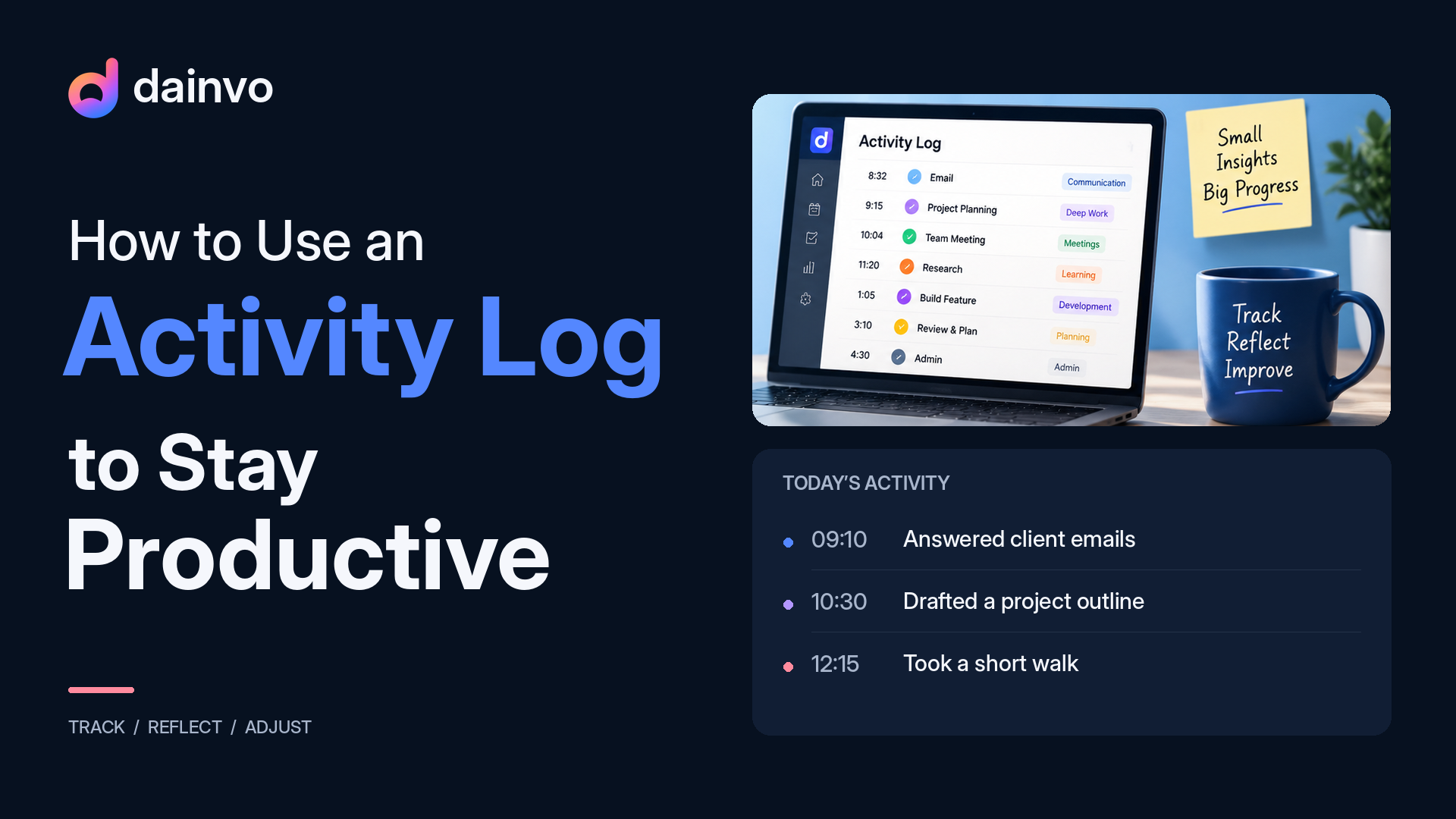
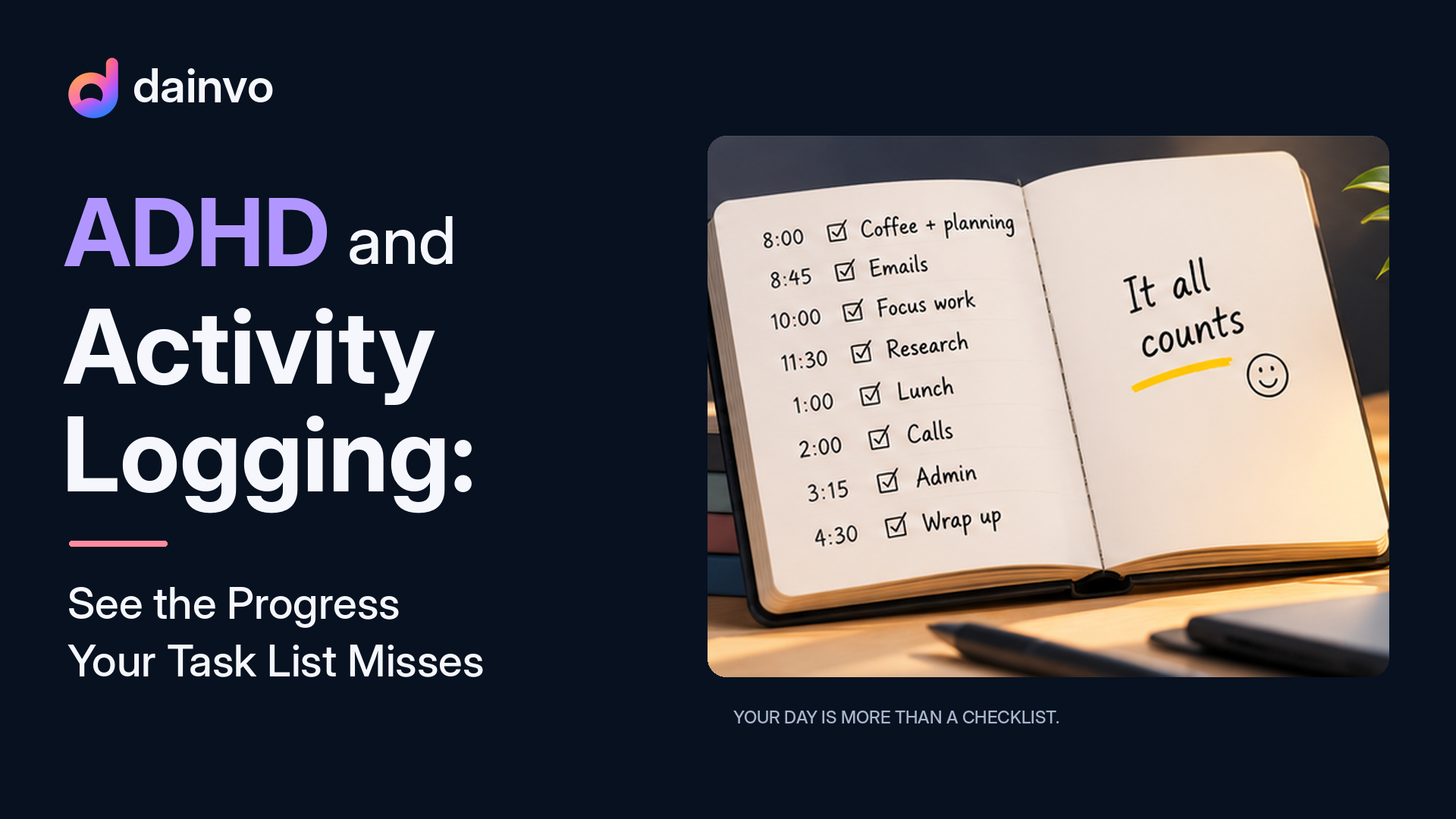
An activity log gives that work a place. Write a short entry about what you were doing, then come back to a record of your day: the progress, the unexpected jobs, and the context you want to remember.
You do not need ADHD to find that useful. But if keeping track of time or recalling where your attention went is a familiar challenge, an activity log may be a particularly helpful addition to your routine.
Quick answer
A daily activity log records what you actually did, including work that never appeared on your task list. You can keep one in a notebook, a notes app, or a simple document and review it when you want to remember what happened or plan your next step.
For people with ADHD, that written record may help make the day easier to review. Instead of starting with "What did I even do?", you have the entries in front of you.
A sentence after a call or a work session is enough to begin. Capture what happened while it is fresh, then use it to give tomorrow's plan more context.
See progress before the task is finished
A task can stay open through several useful work sessions. Researching, making a decision, gathering materials, and drafting a section all move it forward, even before you can check it off.
An entry such as "Answered client questions and drafted the introduction; waiting for the figures" preserves that progress. When you return, you have a reminder of both what you accomplished and where you left off.
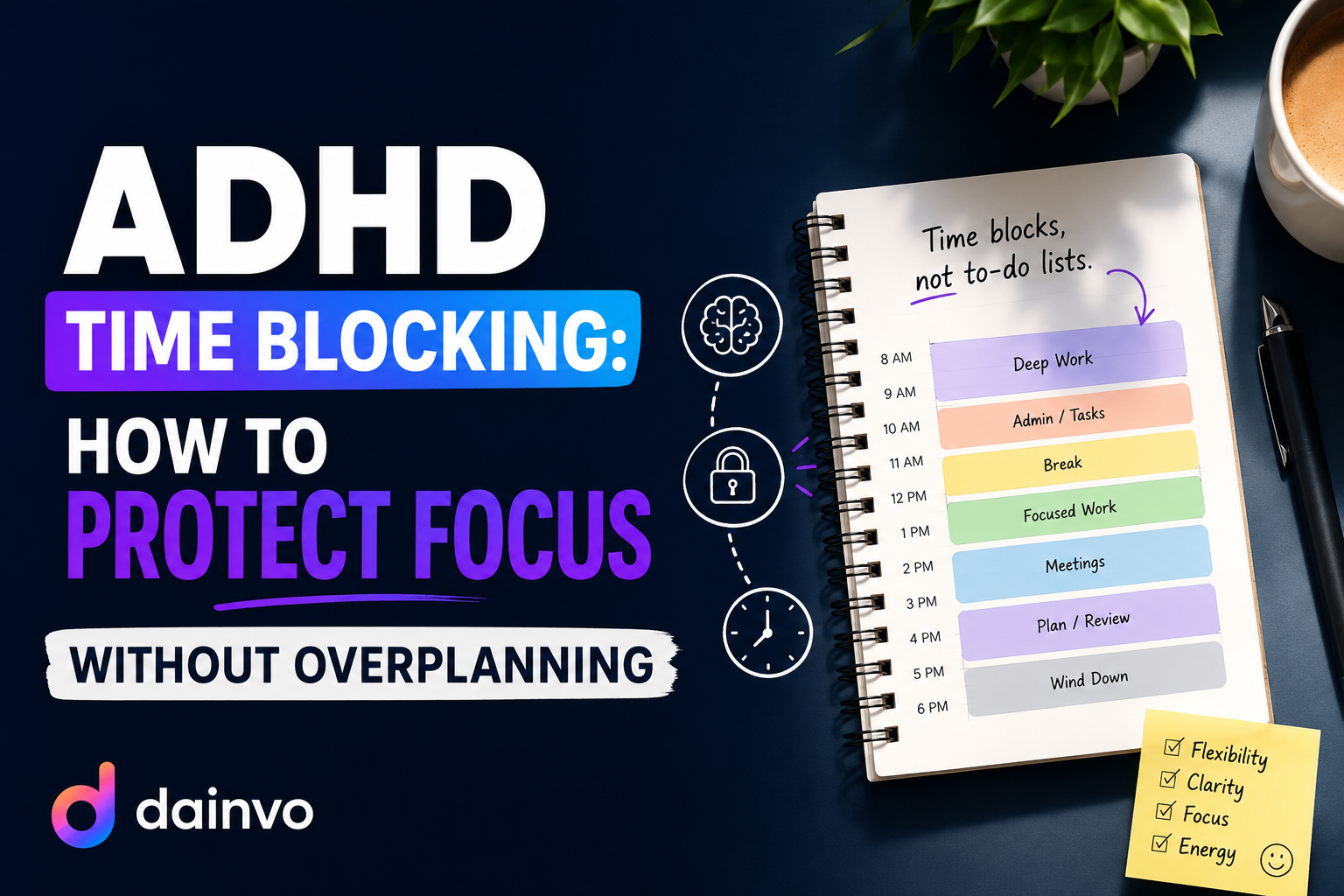
Time blocking gives work a place in your schedule. Logging adds the story of what happened during it. Together, they let you keep your intentions and your actual experience in view.
The same applies to everyday responsibilities. Booking an appointment, sorting out a household problem, or helping someone else takes time and effort. Put those activities in the record too, rather than leaving them out of your account of the day.
A record of your activities gives you room for more than completed tasks.
Give yourself something concrete to plan from
When time is hard to judge, a record of previous work gives you a useful reference. A review and meta-analysis of time perception in ADHD found differences across the lifespan, with variation by age and other factors. That research helps explain why practical ways to make time more concrete are worth considering.
With a written record, you can look back at the actual steps a task involved before deciding where it belongs in your next day.
Suppose you keep giving yourself a short slot for a recurring task, but your entries show that it involves a call, gathering information, and waiting for a reply. You can prepare the information earlier or allow room for the call. The next plan can reflect the work you have already learned about.
If you want to compare durations, include approximate start and finish times in your entry text. If you mainly want to remember the steps, a short description will do. Choose the detail that helps you plan.
Why paying attention to your own progress matters
Self-monitoring means noticing and recording aspects of your own behavior or progress. Research on ADHD gives this idea a useful foundation.
A randomized study of college students with ADHD explored adding self-monitoring to study skills and goal setting. Students in the self-monitoring group showed improvements in academic behavior and goal attainment, among other outcomes. It offers encouraging evidence for using self-monitoring alongside practical skills support.
Research also supports structured approaches to organization and planning. In an adult ADHD randomized trial, a program teaching time management, organization, and planning produced greater improvements in ADHD symptoms than supportive psychotherapy.
These studies examine self-monitoring and structured skills support, rather than daily activity logging on its own. They provide context for a practical habit: notice what happened, keep a record, and use it when deciding what to do next.
A personal activity log is one way to bring that habit into everyday planning.
Turn a vague day into useful details
"Answered messages before opening the report; then gathered the figures" tells you much more than "busy morning."
When you review it, you have options. Open the report before messages, gather the figures the day before, or allow a separate slot for client questions. A short entry can give your next decision something specific to build on.
A useful entry names the activity. Add context only when it explains something you want to understand.
For example, a few entries in an ordinary day might read:
- "Finished the appointment call and booked the follow-up."
- "Worked on the report introduction. Stopped because the figures were missing."
- "Lunch and a walk."
- "Helped a colleague with an urgent issue instead of returning to the report."
These are illustrative examples, not an ideal schedule. Your entries may be shorter or messier.
Include care work, meals, and rest if they help you understand the day. A log that records only completed work tasks can leave out the very things you were trying to account for.
Start with a simple daily record
Choose somewhere easy to reach: a notebook on your desk, a pinned note on your phone, or a document you already keep open. Add the date and a short description of the activity. Include an approximate time if it helps you place it in the day.
Your entries belong to the record of your day, while your tasks and calendar remain the place for future plans. You can capture an unexpected activity without turning it into another item to complete.
Make it part of the routine you already have:
- Pick one question you want the record to answer. "What keeps delaying my afternoon work?" is more useful than "Am I productive enough?"
- Write an entry at a few transitions you already notice, such as finishing a call or stopping for lunch. Note what you were doing.
- Add a short reason when a plan changed. "Waiting for approval" is enough; you do not need a full explanation.
- Browse the day's entries once you have a quiet moment. Look for an answer to your original question.
- Make one adjustment worth trying tomorrow. Leave everything else alone for now.
That last step closes the loop. An entry about missing information can become a reminder to gather it beforehand. A note about a useful work session can help you repeat the setup next time.
A habit you can pick up throughout the day
You can log activities around moments that already stand out: finishing a call, stopping for lunch, or wrapping up a work session. "Sent the draft for review" is enough. So is "Made progress on the outline; next step is the opening section."
If you miss part of the day, pick up with the next activity. Each entry adds context of its own; you can build a useful record without filling in every gap.
Later, browse your entries by date to see what moved forward and what deserves a place in tomorrow's plan. You may spot a useful work pattern, remember an unfinished conversation, or simply see the effort that your task list did not capture.
Keep the language factual and friendly to your future self. The record is there to help you understand your day.
FAQ
Do I need to log every activity?
No. Record enough to answer the question you are investigating. A handful of useful entries can be more manageable than trying to maintain a complete timeline.
Is activity logging only useful for people with ADHD?
No. Anyone can keep a record of work, everyday activities, and progress. This approach may be especially useful if ADHD makes keeping track of the day difficult, but you do not need a diagnosis to benefit from having a record to review.
Is an activity log the same as a done list?
A done list records completed work. An activity log can also include partial progress, interruptions, waiting, and breaks. Those details can explain why a task is still unfinished.
What should I write in my first entry?
Name the activity you just did and add any context you want to remember. "Finished the client call; need to send the revised draft" gives you both a record and a useful starting point for your next planning session.
Start with the next thing you do
Your day contains more than the tasks you check off. Recording the work in between can help you see that effort and bring its context into your next plan.
After your next activity, write one sentence about what happened. When you plan tomorrow, read it back. Start with a useful detail you want to remember, and let the habit grow from there.
Activity logging can complement your everyday routines; it is not a replacement for professional ADHD care.